At checkout
held€24.00
Her bank says yes and sets the money aside. Nothing has moved.
Module 28 · Card payments
A card payment looks instant. It is really a hold, a promise and a transfer that night, and every party along the way takes a fee. Here you follow Larkspur’s customers’ money through the tubes, then set a checkout policy for each kind of order.
The whole idea in one example
€24.00
Her bank says yes and sets the money aside. Nothing has moved.
€23.80
Reaches Larkspur. The rest went in fees to three other parties.
Money comes from a simulated day: Larkspur’s own orders, masked made-up cards and planning-number fees, not anyone’s real prices.
How it works
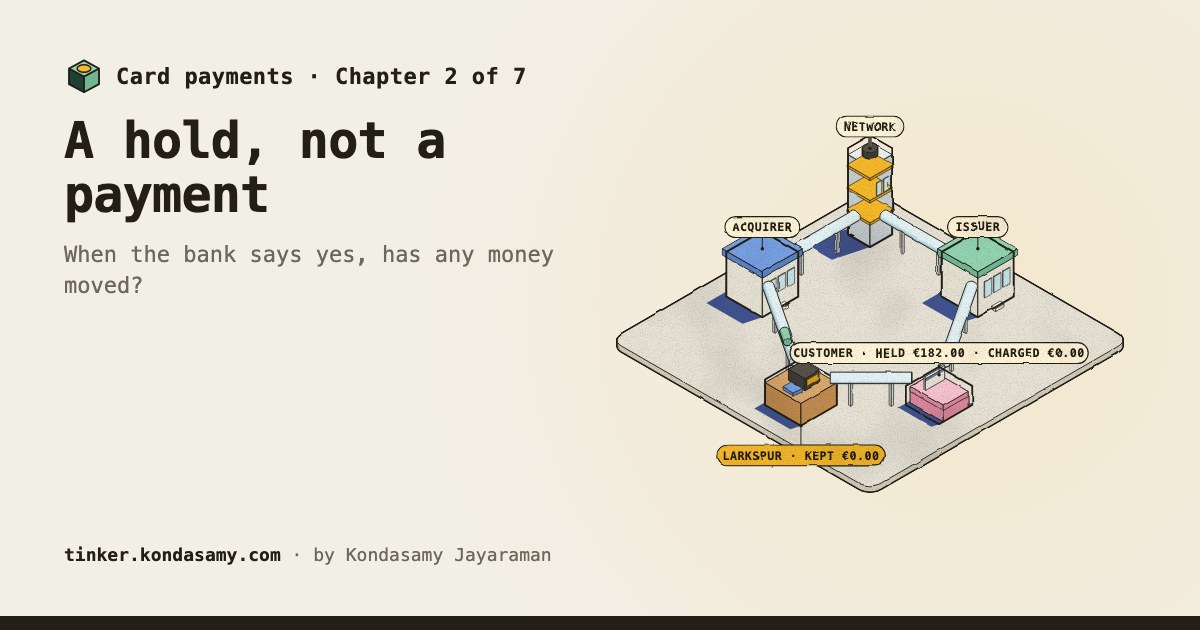
A yes sets money aside; nothing moves
Visa’s guide for US merchants says each approved authorisation reduces the cardholder’s available funds, a hold, and that authorisations a merchant won’t complete must be reversed.
Source, checked 25 October 2026
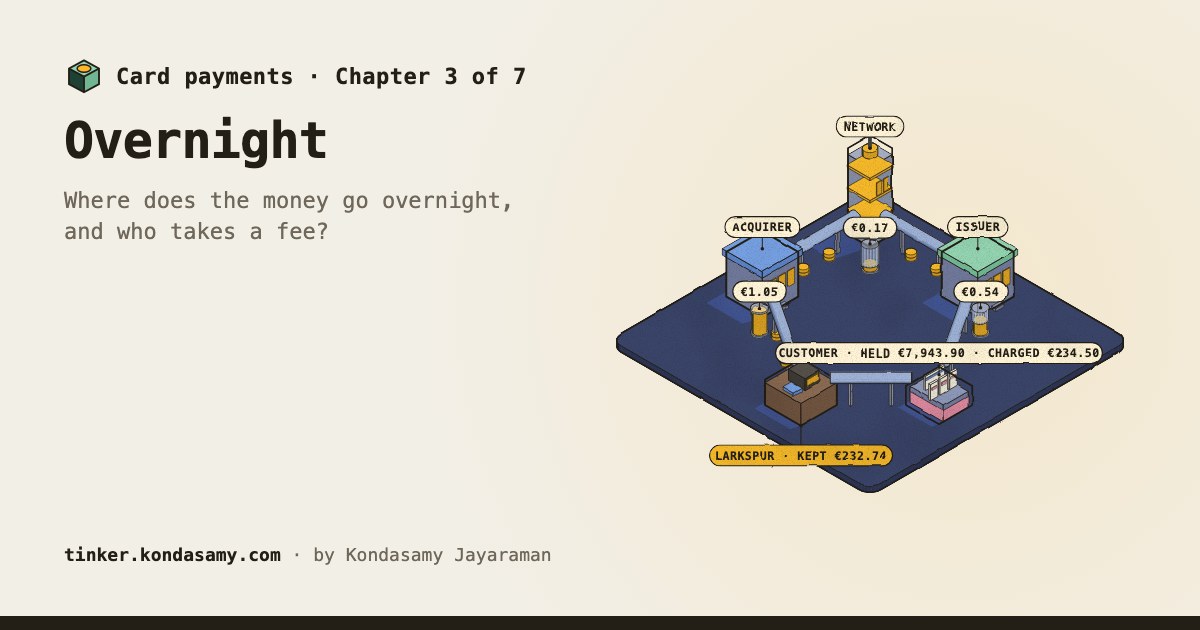
Each party takes a fee on the way
Under EU Regulation 2015/751 (Article 3), the interchange fee on a consumer debit card payment may be at most 0.2% of its value.
Source, checked 25 October 2026
A lost answer can mean two charges
An IETF Internet-Draft (draft-ietf-httpapi-idempotency-key-header, not yet an RFC) has the client send a unique Idempotency-Key so the server can recognise a retry and not repeat the operation.
Source, checked 25 October 2026
A challenge stops thieves, and a few buyers
Visa’s dispute guide for merchants (October 2026) says a fully authenticated 3-D Secure payment is protected from fraud disputes; a payment without 3-D Secure is not.
Source, checked 25 October 2026
The story
A customer pays Larkspur Supply Co. by card; the team follows the money through holds, overnight transfers, fees, retries, fraud checks and chargebacks. You’re on the team that runs the checkout.
Your path
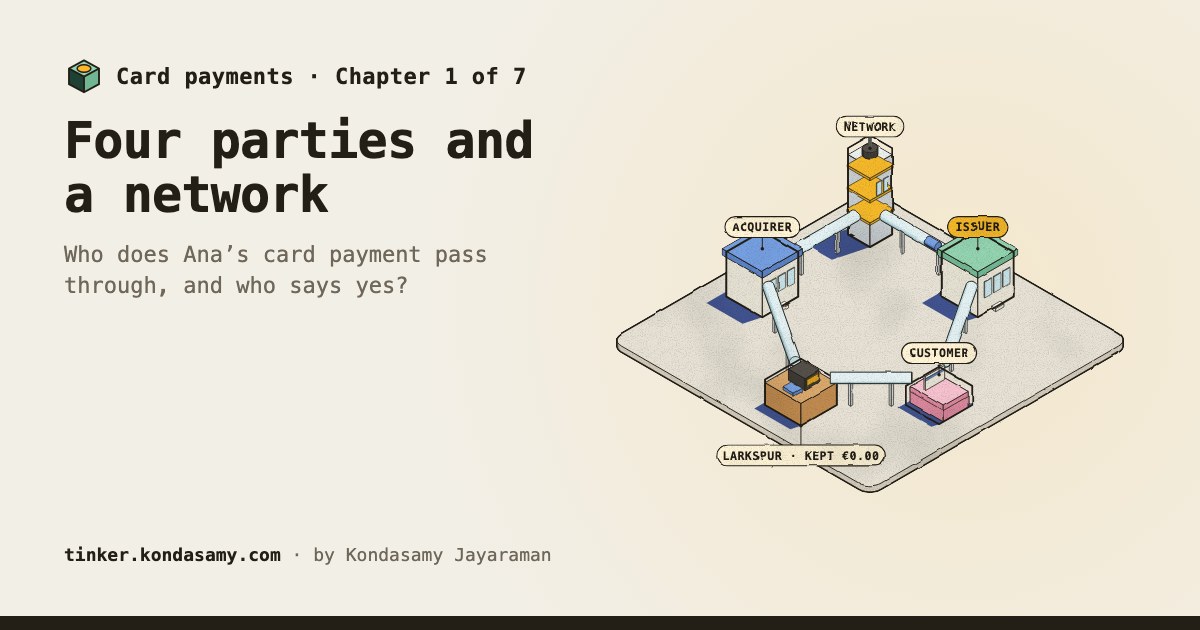
Chapter 1 · done
Who does Ana’s card payment pass through, and who says yes?
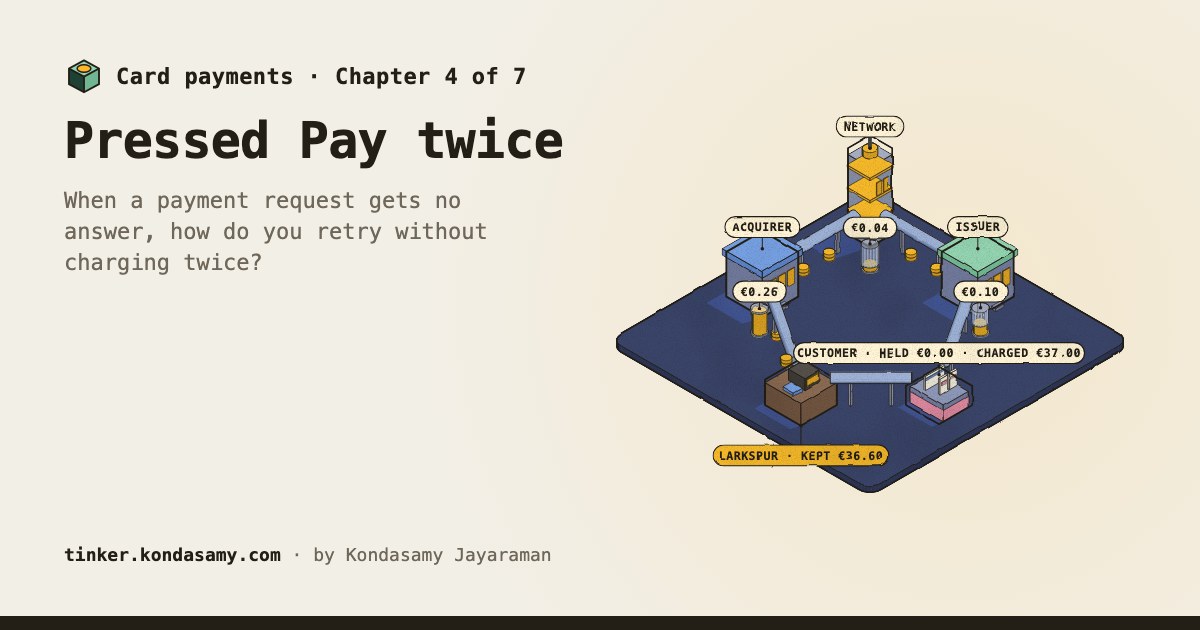
Chapter 4 · done
When a payment request gets no answer, how do you retry without charging twice?
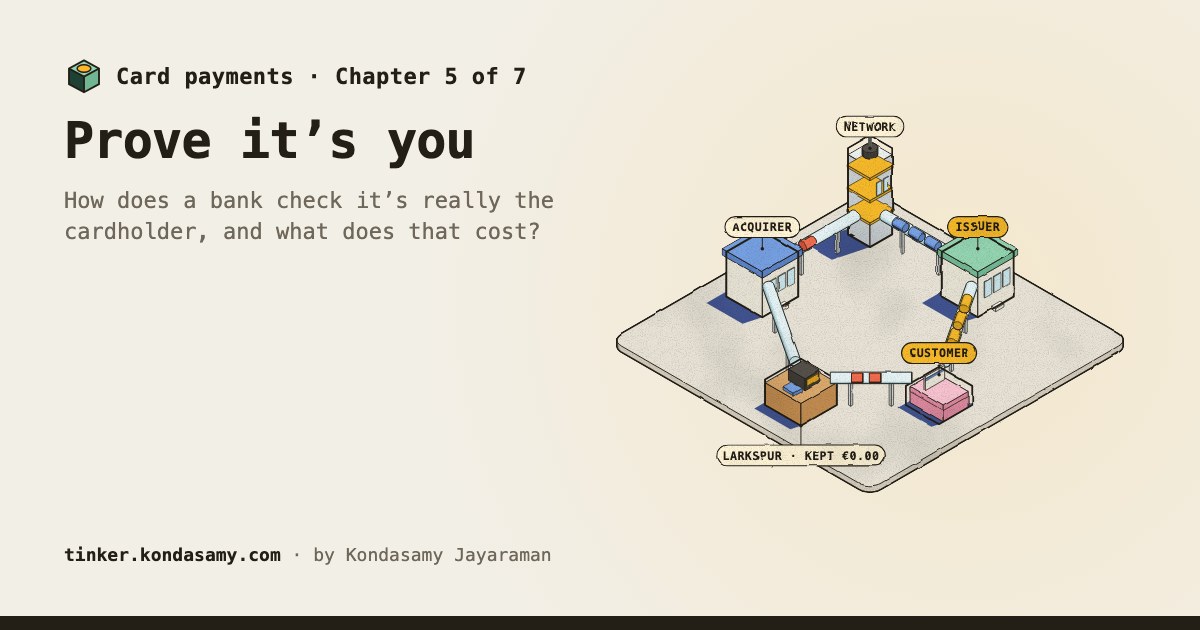
Chapter 5 · done
How does a bank check it’s really the cardholder, and what does that cost?
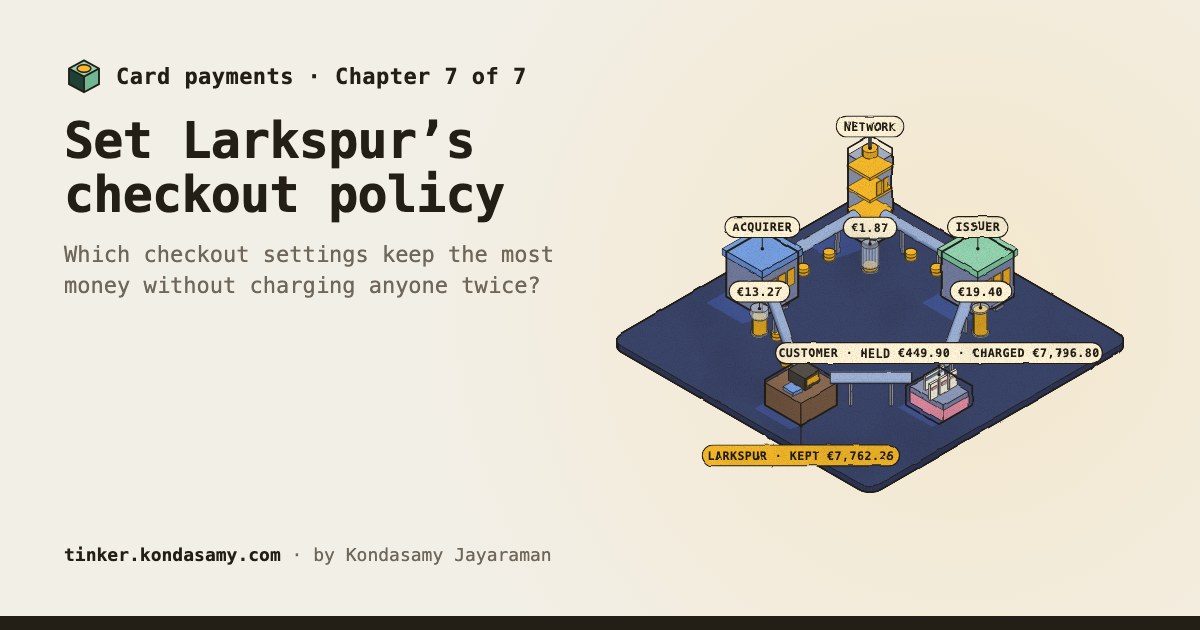
Chapter 7 · done
Which checkout settings keep the most money without charging anyone twice?
Anyone whose product takes card payments, and who wants to know why the money arrives later and smaller, and what a chargeback is. EU rules only; no background needed.