HTTP/1.1, full handshakes
14 trips2,060 ms
8,000 km each way, a lost packet on top.
Module 27 · Opening a web page
Between a click and a page, a browser looks up a name, shakes hands twice, seals the line and asks for every file, each a trip across the map. Here you follow Larkspur’s customers, near and far, and make the page fast for all of them.
The whole idea in one example
2,060 ms
8,000 km each way, a lost packet on top.
1,380 ms
Fewer round trips, the same road.
Waits come from a simulator: Larkspur’s own customers and planning numbers, not a measurement of any real network or browser.
How it works
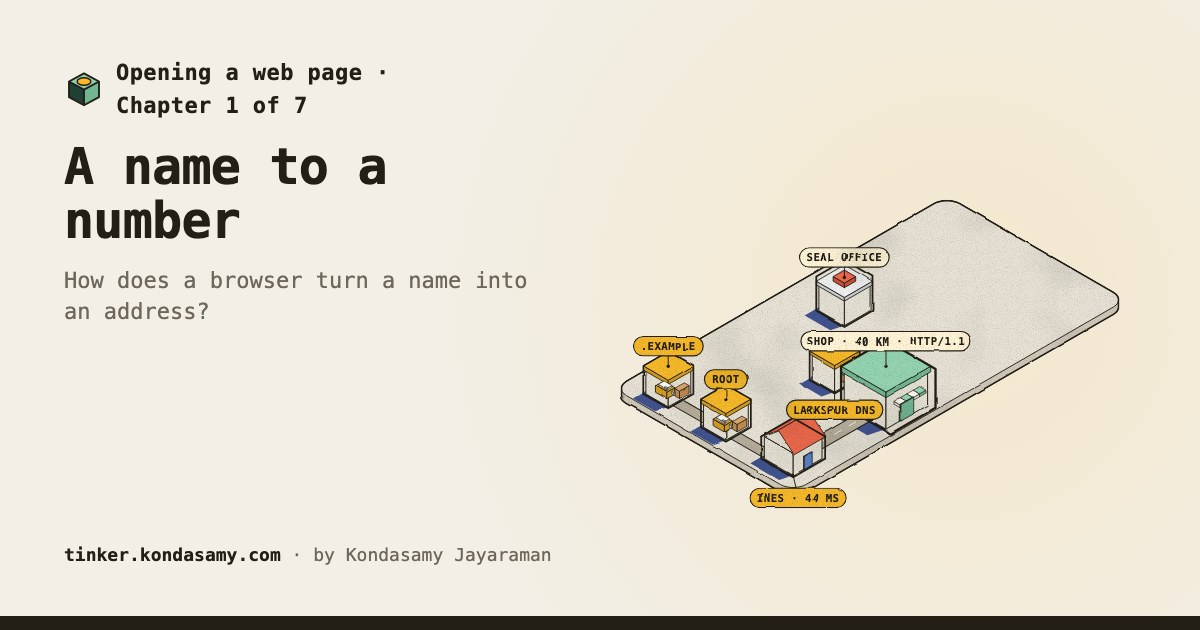
The directory answers office by office
DNS names form a tree held in parts by many name servers; a resolver that knows nothing better starts at the root’s servers and follows each referral closer to the name (RFC 1034).
Source, checked 25 October 2026
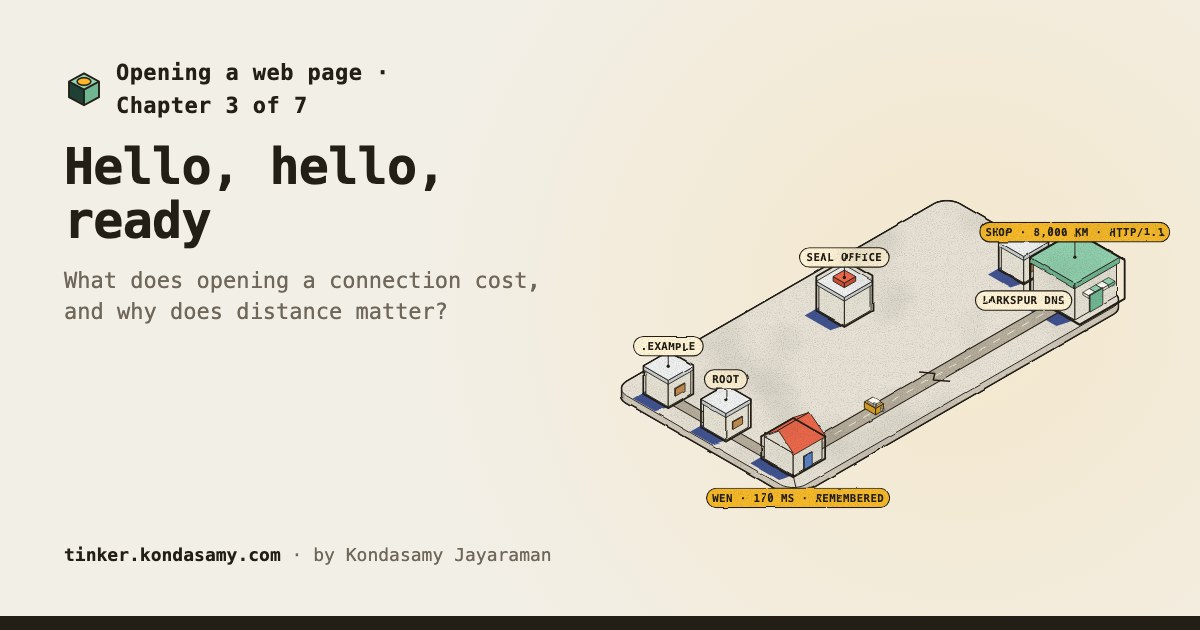
A handshake costs a round trip
TCP opens a connection with a three-way handshake, SYN, SYN-ACK, ACK, and hands data to the application only once the connection is established (RFC 9293).
Source, checked 25 October 2026
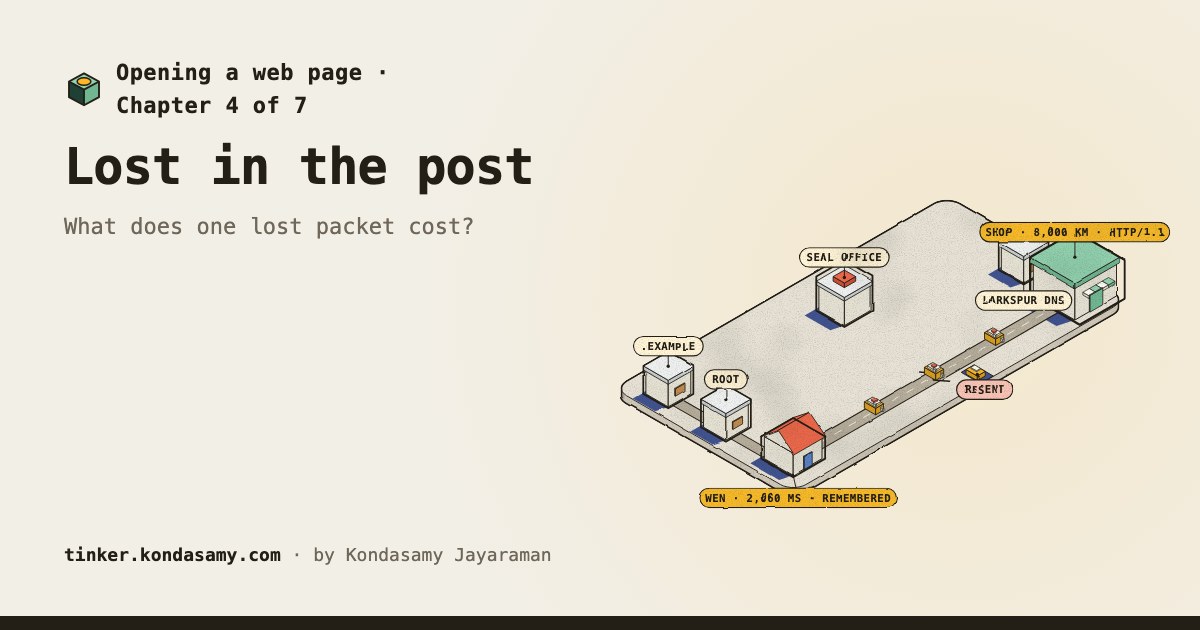
A lost packet waits out a timeout
Before it has measured a round trip, a TCP sender waits 1 second for an acknowledgement, and it rounds any shorter computed timeout up to 1 second, then resends (RFC 6298).
Source, checked 25 October 2026
TLS seals the line and checks the name
For https, the browser checks that the certificate matches the name it asked for, to stop anyone impersonating that server (RFC 9110).
Source, checked 25 October 2026
The story
Larkspur Supply Co.’s customers open its shop from near and far; the team follows each round trip from the name to the last photo, and makes the page fast for all of them. You’re on the team that runs the shop.
Played Caching & CDNs? This is what happens on each of its round trips.
Your path
Chapter 3 · done
What does opening a connection cost, and why does distance matter?
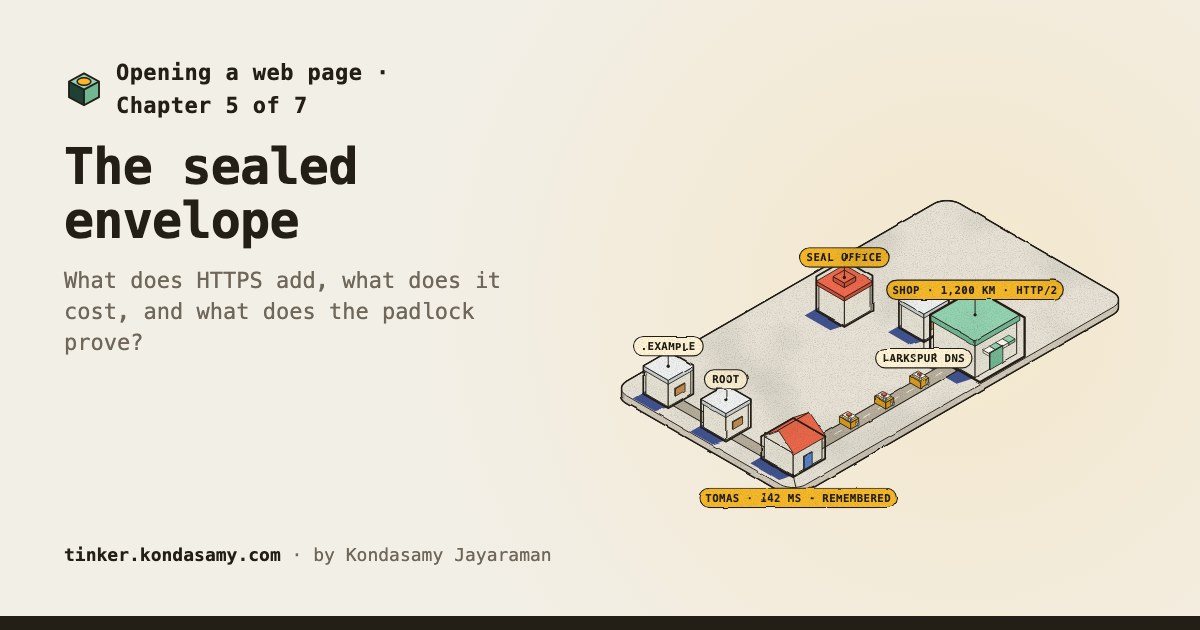
Chapter 5 · done
What does HTTPS add, what does it cost, and what does the padlock prove?
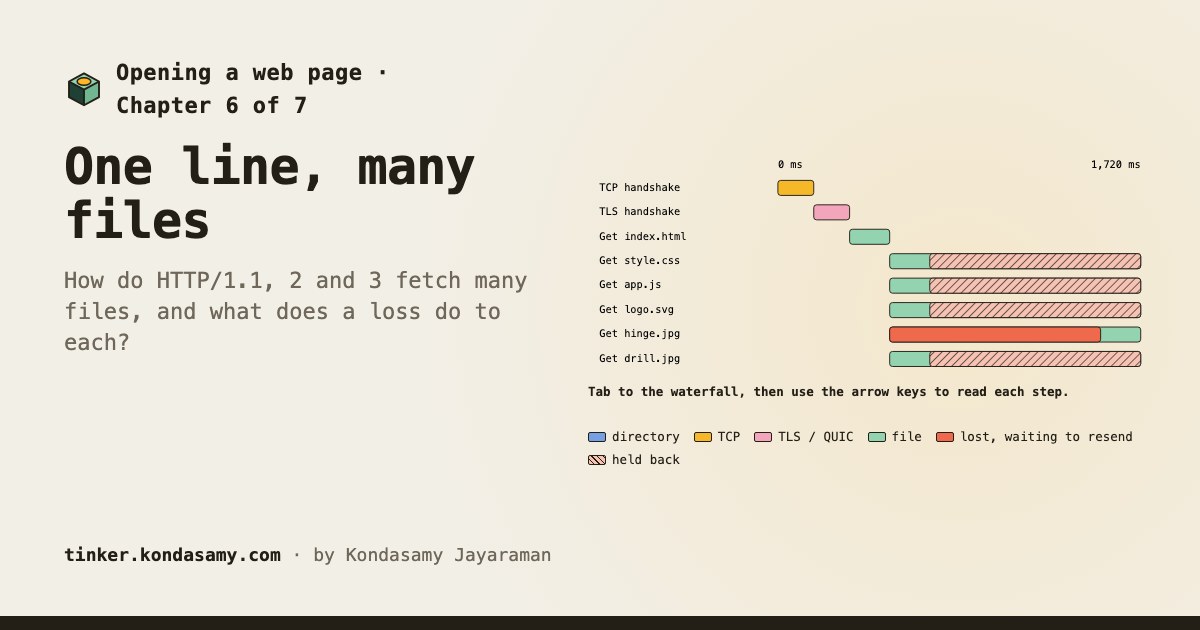
Chapter 6 · done
How do HTTP/1.1, 2 and 3 fetch many files, and what does a loss do to each?
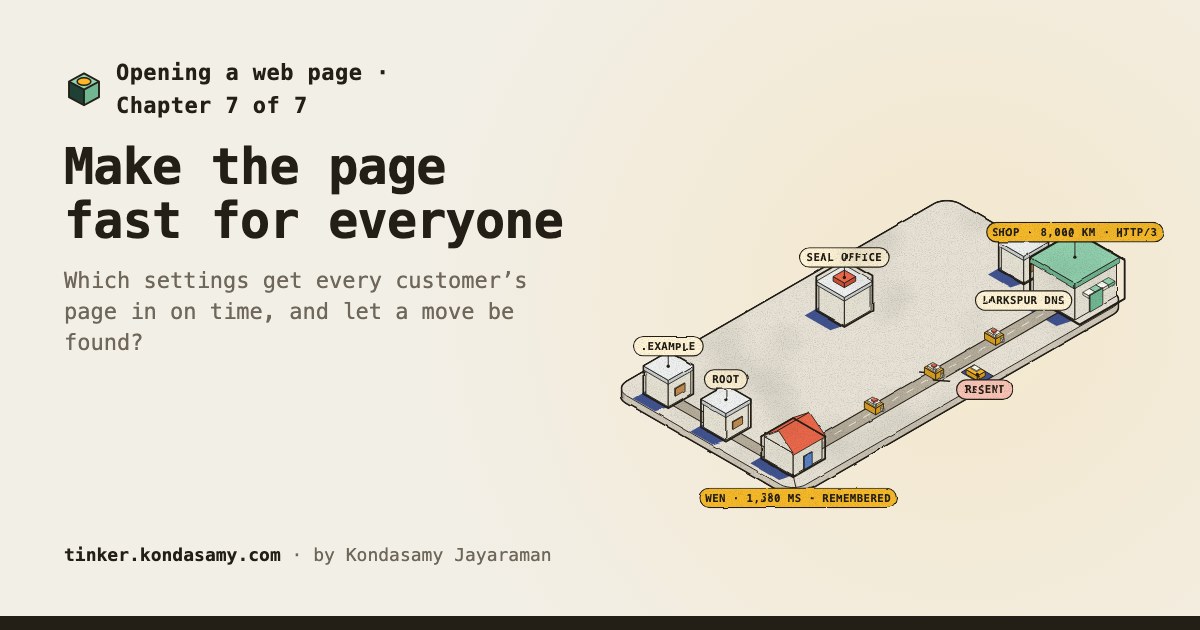
Chapter 7 · done
Which settings get every customer’s page in on time, and let a move be found?
Anyone whose product is a web page, and who wants to know where the wait goes before it appears: the lookup, the handshakes, a lost packet and the files. No background needed.