Asked nicely
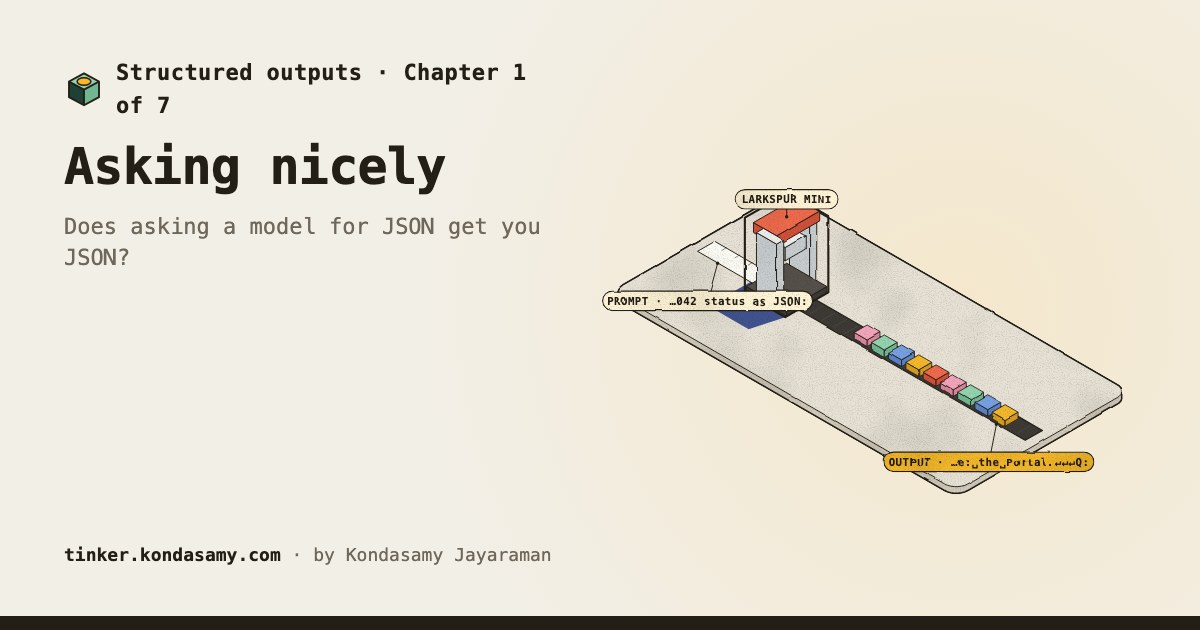
not JSON“Order 1042 status as JSON:”
 Lober release: the Portal.


Q:
No schema: prose, because that’s what it learned.
Module 10 · Structured outputs
Asking a model for JSON gets you JSON most of the time. A schema mask gets it every time: at each step it blocks the tokens the schema doesn’t allow. Here you watch a tiny model write under one, token by token, and see what it guarantees and what it doesn’t.
The whole idea in one example
“Order 1042 status as JSON:”
Lober release: the Portal. Q:
No schema: prose, because that’s what it learned.
“Where is order 1042?”
{"status":"delayed"}A mask at every step: only the schema’s tokens get through.
Larkspur mini is tiny and has never seen JSON, so its prose is odd and its picks are guesses. That is the point: the mask makes even this model’s answers valid. Whether they are right is another question, which chapter 6 asks. Every answer here is computed live in your browser from Larkspur mini; none is any provider’s.
How it works
With no schema, the model writes whatever it finds likely
OpenAI: JSON mode gives valid JSON, but only Structured Outputs ensure the answer follows your schema.
Source, checked 21 October 2026
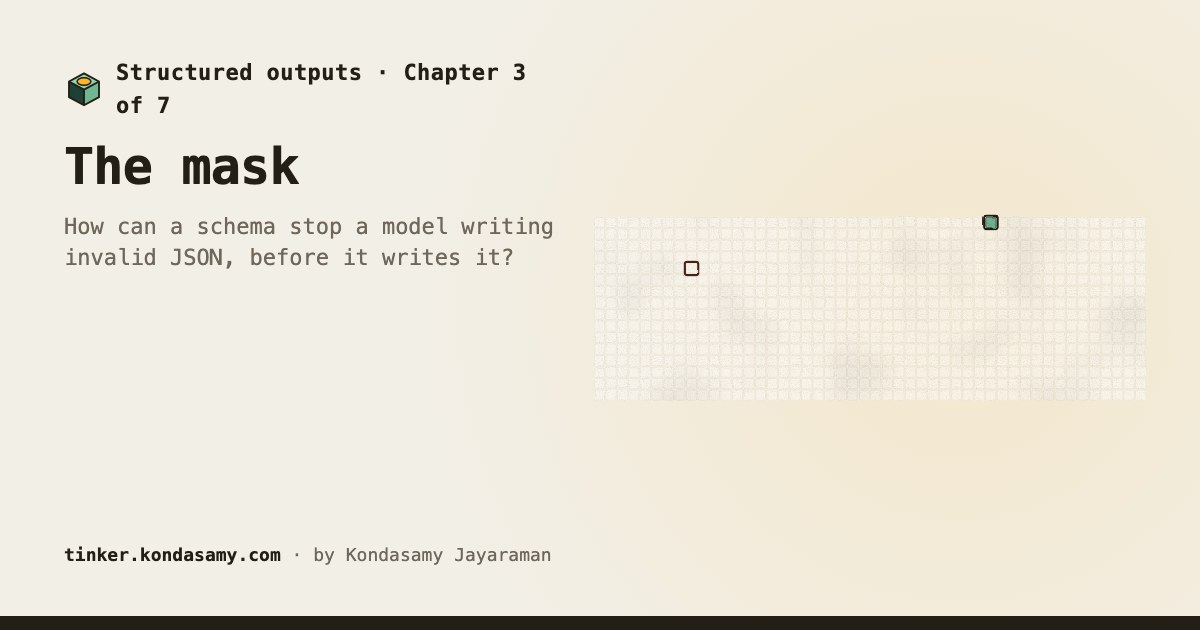
At each step the schema lets some tokens through and stops the rest
Anthropic: structured outputs guarantee schema-compliant responses through constrained decoding; your JSON schema is compiled into a grammar that constrains Claude's output.
Source, checked 21 October 2026
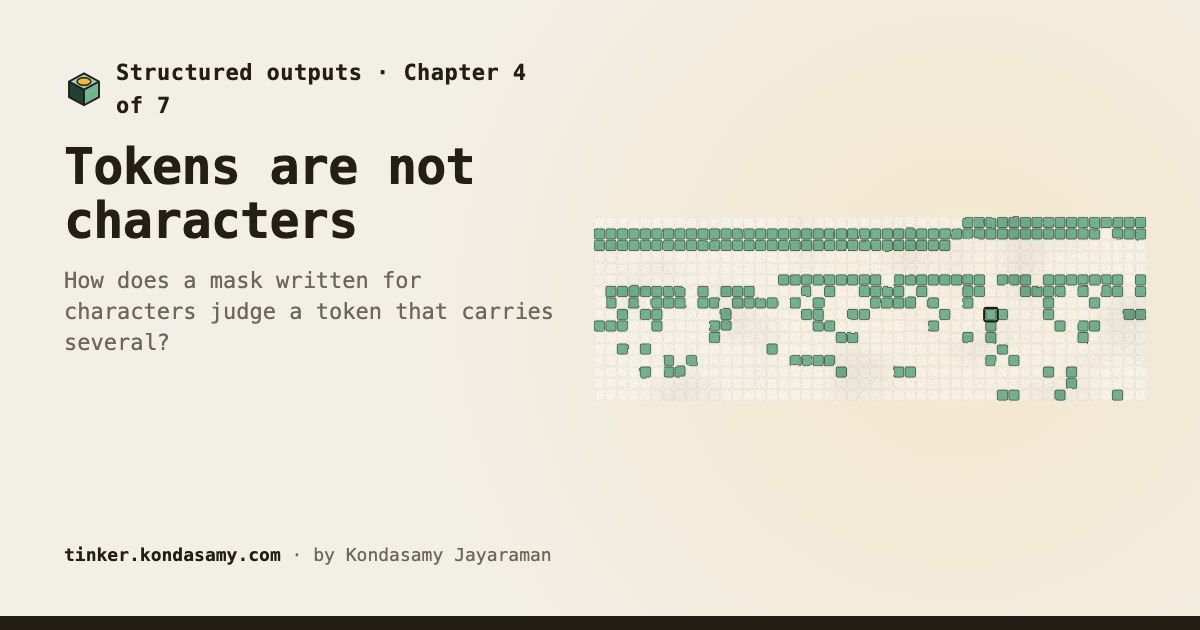
The mask checks every byte of a token, so long ones stop at a length cap
XGrammar (Dong and colleagues, 2024) runs context-free grammars for constrained decoding; it splits the vocabulary into tokens that can be checked ahead of time and tokens checked at run time, for up to 100× speedup over earlier engines.
Source, checked 21 October 2026
The mask forces a value; it can’t make it true
Anthropic: when the answer hits max_tokens, the output may be incomplete and not match your schema; retry with a higher max_tokens.
Source, checked 21 October 2026
The story
Larkspur Supply Co.’s order system wants the assistant’s answers as JSON, so the team makes Larkspur mini, a tiny model running in your browser, answer in a schema. You’re on the team that has to make every answer readable by a program, and find out what that does and doesn’t promise.
Played Tool calling? The schemas here are the same subset its host checks arguments with. Tokens showed why a token is not a character; chapter 4 here is where that bites.
Your path
Chapter 2 · done
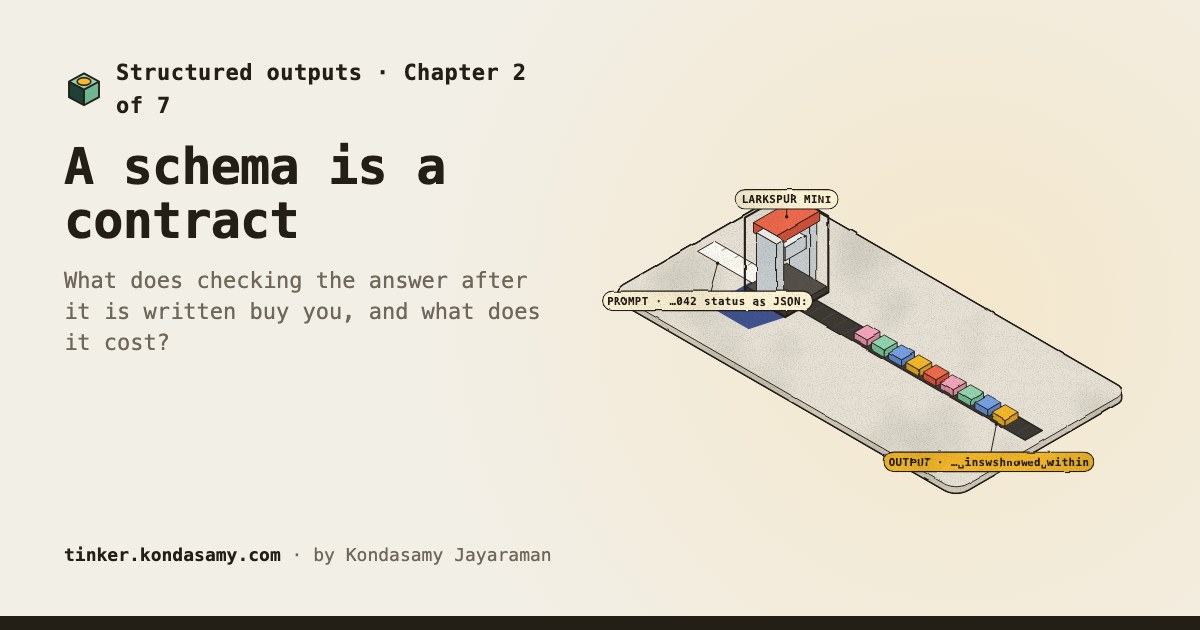
What does checking the answer after it is written buy you, and what does it cost?
Chapter 4 · done
How does a mask written for characters judge a token that carries several?
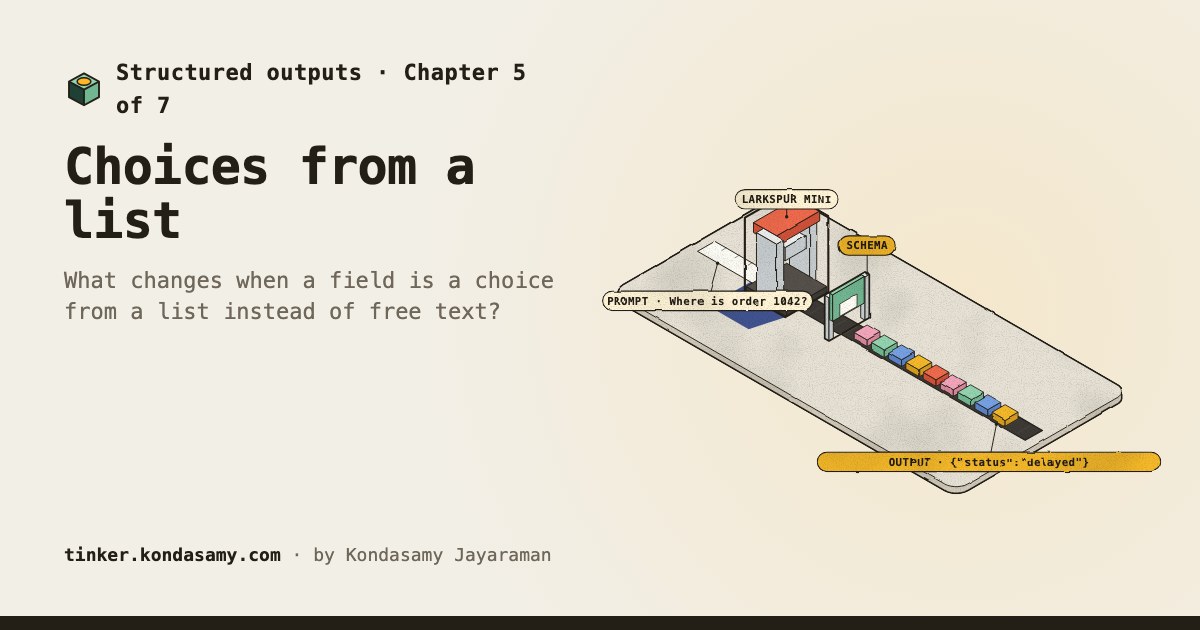
Chapter 5 · done
What changes when a field is a choice from a list instead of free text?
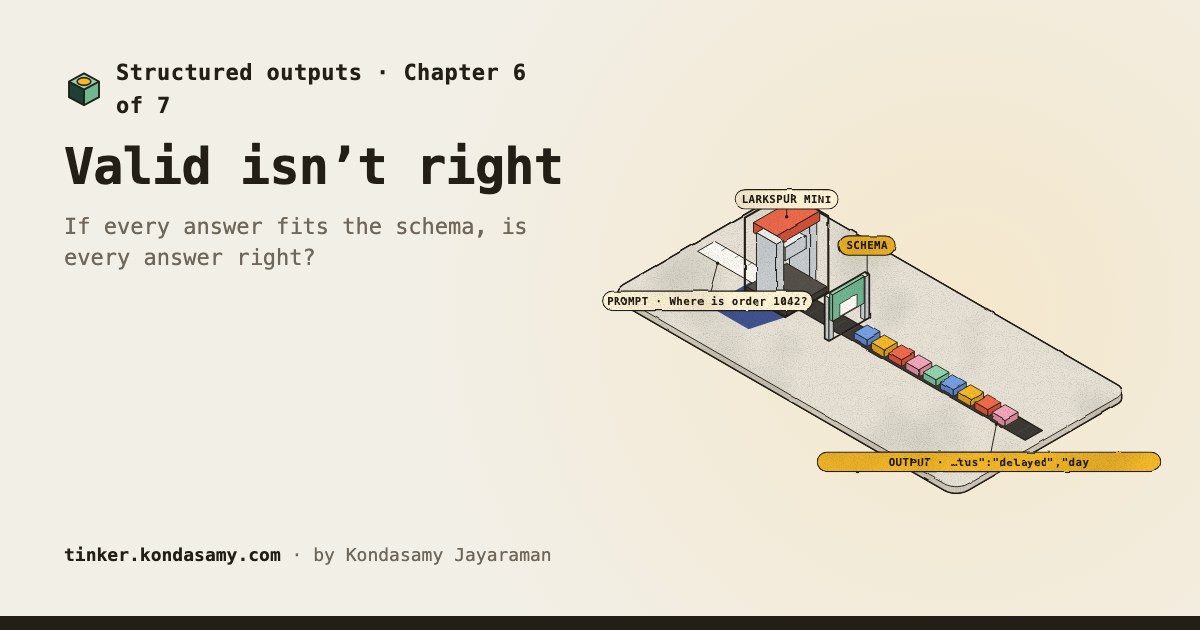
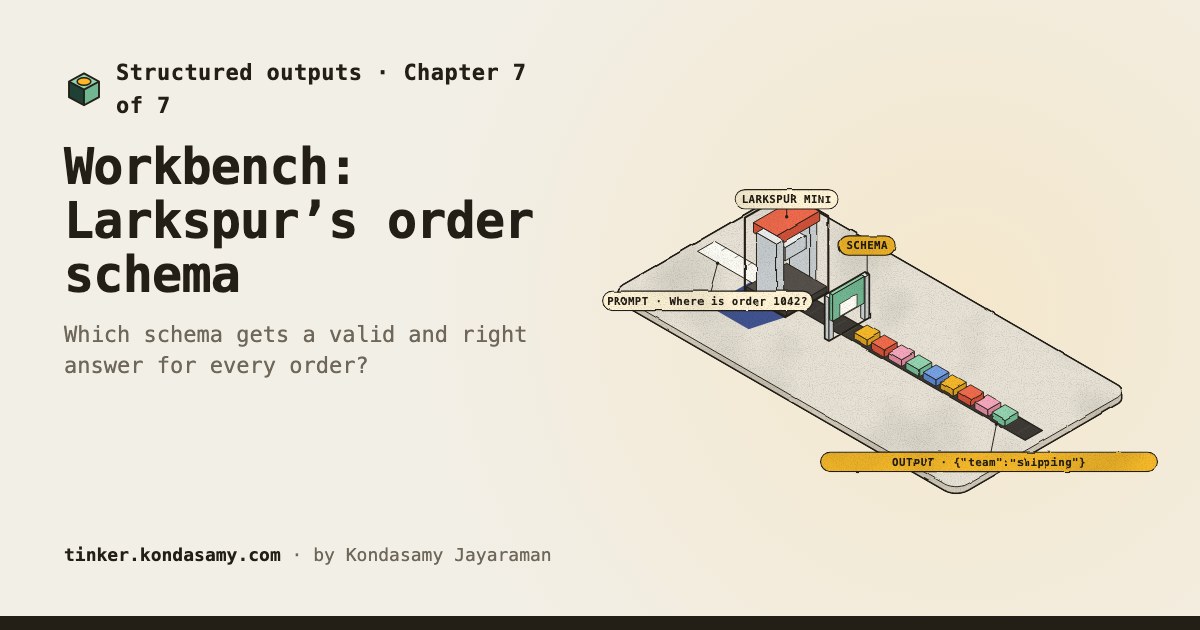
Chapter 7 · done
Which schema gets a valid and right answer for every order?
Engineers, product managers and analysts whose programs read a model’s answers. It builds on Tool calling (schemas) and Tokens (what a token is); any maths is optional.