Round robin
p991,000 ms
Birch still gets every fourth request.
Module 35 · Load balancing
One server has a ceiling; several need something to pick one for every request. Here you put Larkspur’s shop behind a load balancer and keep a sale fast through a crash, a slow server and full carts.
The whole idea in one example
1,000 ms
Birch still gets every fourth request.
288 ms
Birch’s requests pile up, so it gets fewer.
Waits come from a simulated sale: Larkspur’s own traffic and planning numbers, not a measurement of any real server or balancer.
How it works
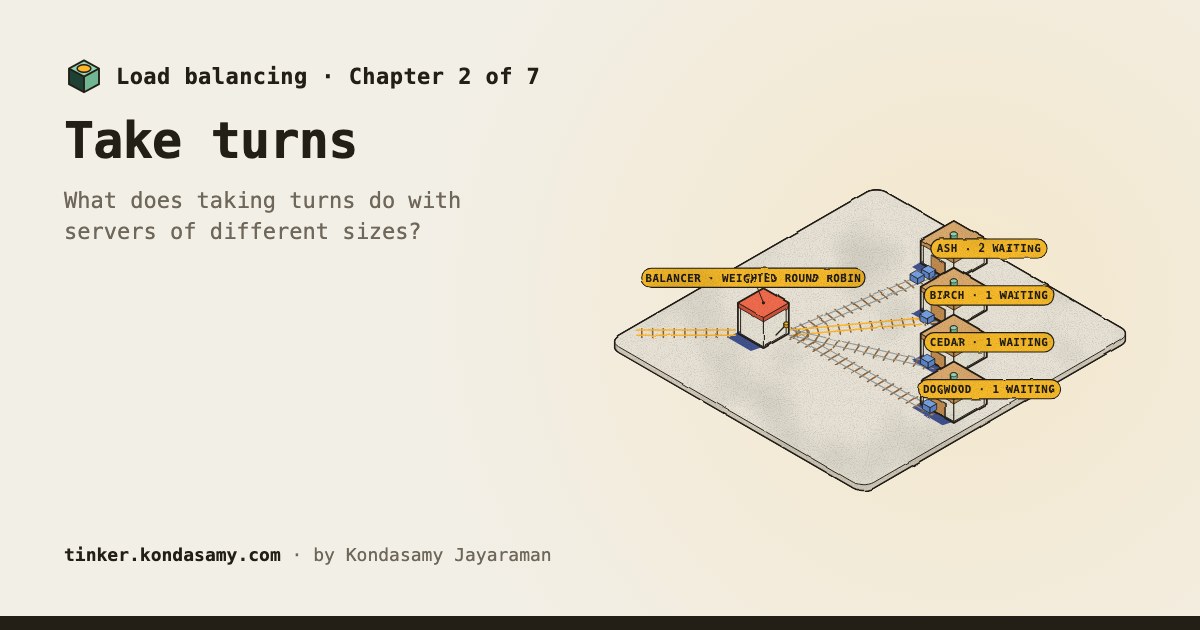
Round robin sends each server the next request
NGINX sends requests to its servers in round-robin fashion unless another method is set: round robin is its default.
Source, checked 25 October 2026
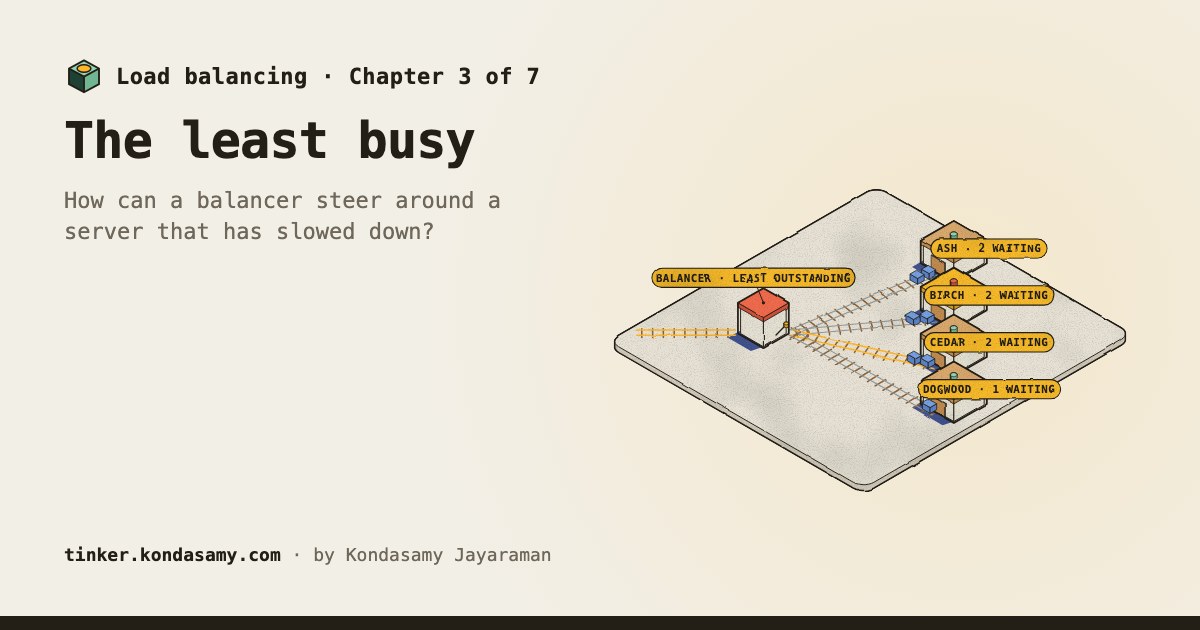
Counting waiting requests steers around a slow server
NGINX’s least-connected method sends the next request to the server with the fewest active connections, which spreads load more fairly when some requests take longer.
Source, checked 25 October 2026
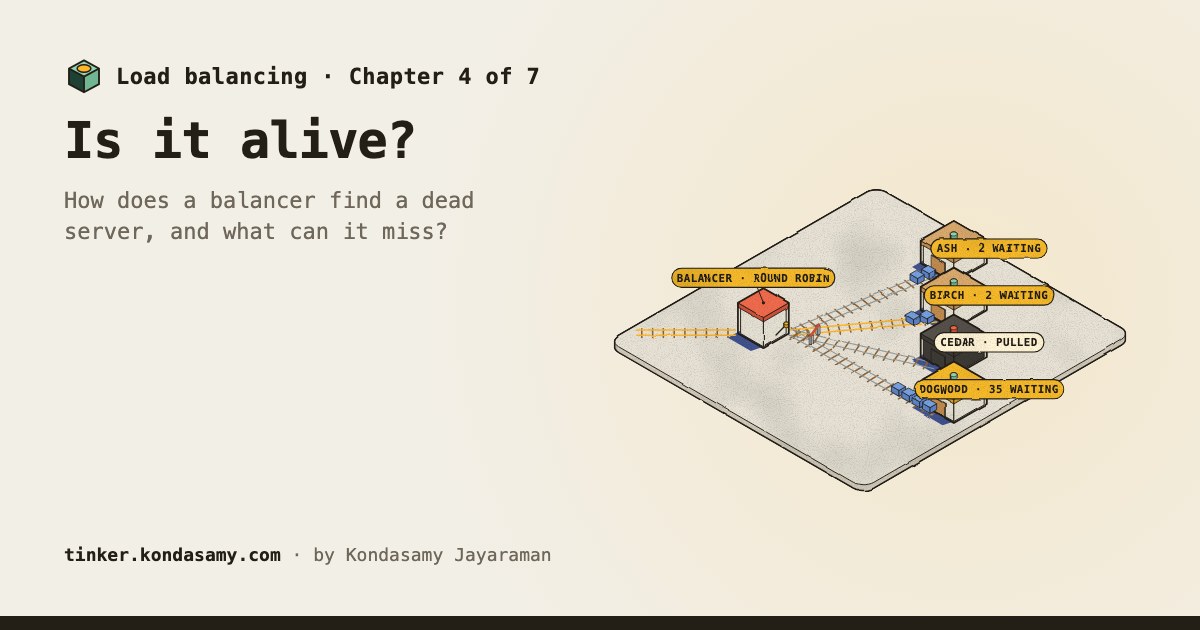
A health check pulls a dead server
An AWS Application Load Balancer checks each target every 30 seconds by default and takes it out of service after 2 failed checks in a row, its default unhealthy threshold.
Source, checked 25 October 2026
A hedged copy rescues the slowest requests
Dean and Barroso describe hedged requests: send the same request to a second server once the first has waited longer than most requests do, and use whichever answers first.
Source, checked 25 October 2026
The story
Larkspur Supply Co.’s shop outgrows one server; the team puts four behind a load balancer and keeps a sale fast through a crash, a slow server and full carts. You’re on the team that runs the shop.
Played Inference engineering? It shows one server from the inside; this module spreads the crowd over several.
Your path
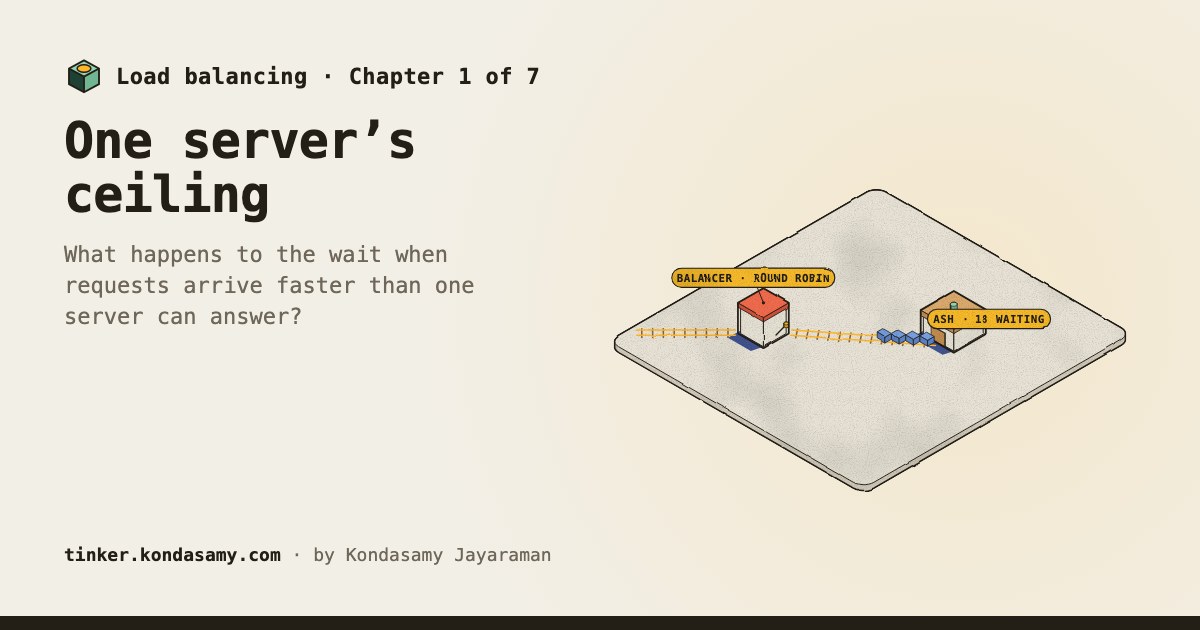
Chapter 1 · done
What happens to the wait when requests arrive faster than one server can answer?
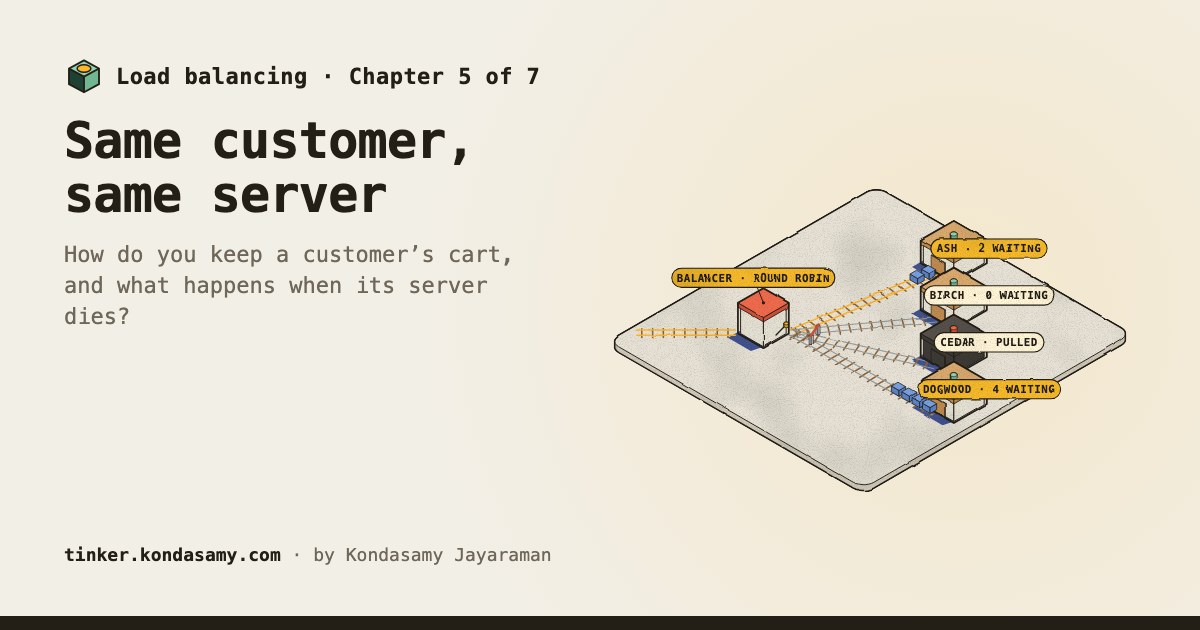
Chapter 5 · done
How do you keep a customer’s cart, and what happens when its server dies?
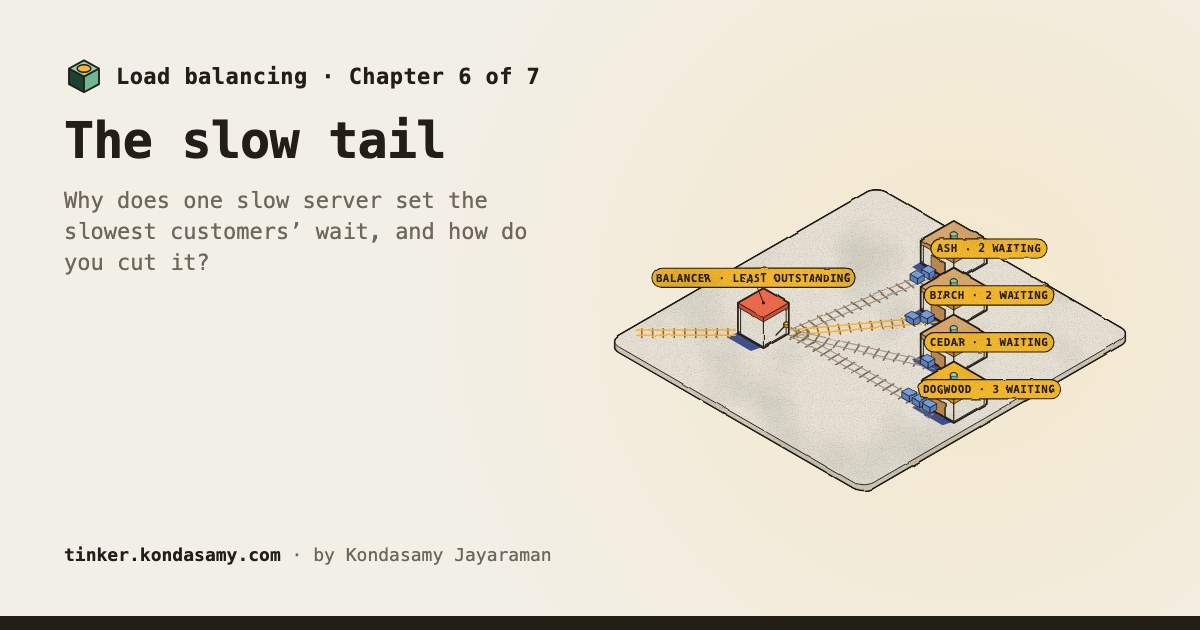
Chapter 6 · done
Why does one slow server set the slowest customers’ wait, and how do you cut it?
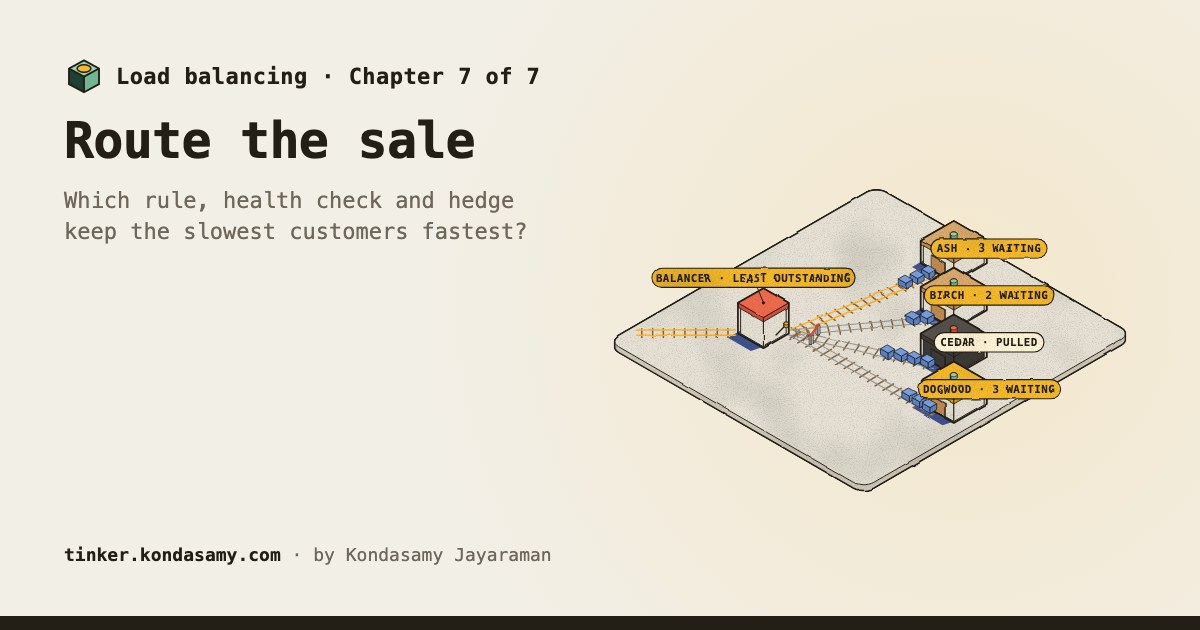
Chapter 7 · done
Which rule, health check and hedge keep the slowest customers fastest?
Anyone whose product runs on more than one server, and who wants to know why a dashboard can say every server is healthy while customers wait. Knowing what a server and a request are is enough.